
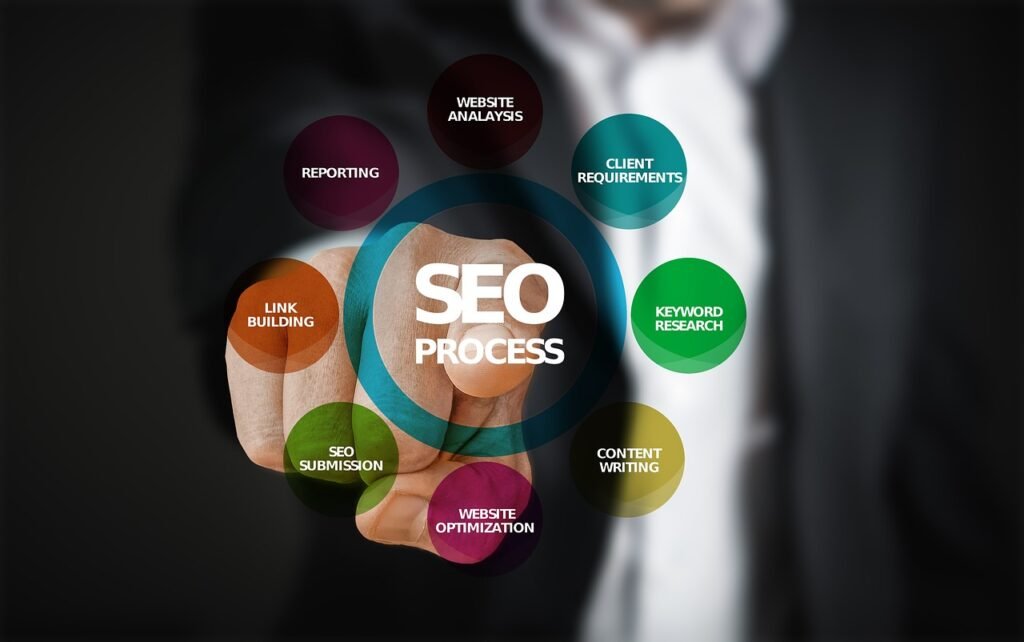
SEO Tips and Tricks to Boost Your Website’s Visibility
1. Conduct Thorough Keyword Research
Keyword research is the foundation of any SEO campaign. Identifying the terms your target audience is searching for helps you align your content with their needs. Use tools like Google Keyword Planner, Ahrefs, or SEMrush to find high-volume and low-competition keywords.ds.

Long-Tail Keywords: Focus on long-tail keywords (e.g., “best organic skincare products” instead of “skincare”) to target specific user intent and improve conversion rates.
Local Keywords: If your business operates locally, include location-based keywords to attract nearby customers.
Incorporate these keywords naturally into your content, meta titles, descriptions, and headers without overstuffing.
2. Optimize On-Page SEO Elements
Meta Titles and Descriptions: Create compelling and keyword-rich meta titles and descriptions that summarize your content and encourage clicks.
Headers (H1, H2, H3): Use headers to structure your content for readability and include keywords where appropriate.
Internal Linking: Link to relevant pages on your website to improve navigation and help search engines crawl your site effectively.
URL Structure: Use short, descriptive URLs that include target keywords (e.g., yourwebsite.com/seo-tips).
3. Publish High-Quality, Relevant Content
Content is king in SEO. Search engines prioritize websites that consistently publish valuable, well-written, and relevant content. Focus on creating blog posts, how-to guides, case studies, or videos that solve your audience’s problems.
Evergreen Content: Invest in creating timeless content that stays relevant over time, such as “Beginner’s Guide to SEO.”
Content Length: While quality matters more than quantity, longer content (1,000+ words) often performs better in search rankings because it provides comprehensive information.
Optimize for Featured Snippets: Answer common questions concisely to increase your chances of appearing in Google’s featured snippets.
4. Improve Website Speed and Mobile Optimization
Page speed is a critical ranking factor. A slow-loading website can hurt both your user experience and your SEO rankings. Use tools like Google PageSpeed Insights to identify and fix issues that may slow down your site.
Minimize HTTP Requests: Reduce the number of elements like scripts, images, and CSS on a page.
Compress Images: Use image compression tools like TinyPNG or Smush to reduce file sizes without compromising quality
Mobile-Friendly Design: With mobile-first indexing, ensure your website is fully responsive and offers a seamless experience on all devices.
5. Build Quality Backlinks
Guest Blogging: Write guest posts for respected websites in your niche to earn backlinks.
Content Partnerships: Collaborate with other businesses or influencers to share and link each other’s content.
Broken Link Building: Identify broken links on other websites and suggest your content as a replacement.
6. Leverage Local SEO Strategies
Ensure your business name, address, and phone number (NAP) are consistent across all platforms.
Collect reviews from happy customers to improve your credibility and local rankings.
Use location-specific keywords and create content tailored to your local audience, such as blog posts about community events or local industry trends.
7. Monitor and Analyze Your SEO Performance
Organic traffic.
Click-through rates (CTR).
Bounce rates.
Keyword rankings.
Use this data to refine your strategy and focus on the tactics that drive the best results.
Conclusion
Implementing these SEO tips and tricks can significantly enhance your website’s visibility, drive more traffic, and improve conversions. However, SEO is an ongoing process that requires patience, consistency, and adaptability to algorithm updates. By focusing on keyword research, content quality, technical optimization, and backlinks, you can build a strong SEO foundation for your website.
Need help improving your website’s SEO performance? Our digital marketing agency specializes in tailored SEO strategies that deliver measurable results. Contact us today to boost your rankings and grow your online presence!